

Modern-day life is morbidly sedentary.
The increased efficiency that industrialization and technological advancements have afforded humanity has contemporaneously cost most human beings the premature loss of their full potential mobility and strength. Unless the body in question belongs to an individual who is a professional, or an adept hobbyist, at some bodily movement modality, wherein skillful bodily movement, or physique itself, is the explicit requisite (e.g. an athlete, a dancer, a contortionist, a bodybuilder), the human body rarely receives consideration as an instrument in its own right. Instead, the average modern-day individual generally attends to instruments external to their self, and their body (e.g. musical instruments, occupational equipment, digital devices); with their own body relegated to a mere subservient, mundane workhorse to their existence.
Modern-day humans spend hours hunched over a digital device of some sort. We wrap our bodies, however subtly, around these instruments, usually for extended amounts of time, and often to the long-term detriment of the body.

Even the seemingly simple task of sitting at work, at home, or in social situations, often for prolonged periods and in unergonomic settings, puts undue repetitive stress on, and potentially creates unhealthy tension patterns in, the human body. Prolonged sitting also disrupts metabolic functions, which results in weakened vascular health, potential heart damage, and, even, harm to the brain. Furthermore, the modern-day individual’s constant contactability, coupled with their constant access to media, yields an almost unrelenting activation of the sympathetic nervous system, which is responsible for the fight-or-flight response. This results in physical and chemical changes within the brain, and bodily stress symptoms such as increased blood pressure, heart rate and stress hormone levels. These changes in the brain and the body, when prolonged, can lead to actual psychological changes which seriously impact certain brain functions, and physiological changes which can cause bodily complications such as heart, and gastrointestinal, issues.
A bodily movement practice that mitigates, and counteracts, the negative effects of the modern-day sedentary lifestyle ought to be a priority.
The human body is not just the mind’s ultimate instrument, but also a symbiotic part of the whole human being. The human body is the primary interface wherein the mind’s thoughts are translated into actions (i.e. bodily movements), and sounds (i.e. vocalizations). These translations render the human mind capable of expression, through expressive bodily movements (e.g. body language, dance), through bodily movements directed toward manipulation of other instruments (e.g. playing a musical instrument, writing with a pen, using a digital device) and through (linguistically comprehensible or otherwise) vocalizations. The ability to express itself enables the human mind to assert itself. Furthermore, the human body is the primary interface whereby the human mind receives information about the external world; the bodily senses are the primary interface through which that human mind initially learns.

The body and mind are symbiotic; they rely upon each other.
The body is the primary interface between the mind and the external physical world; the mind’s physical embodiment and (bodily and vocal) expression; the physical avatar of the mind and its will. The physiological can (and usually does) greatly affect the psychological; dysfunction in the body can affect the mind. Thus, the body, just as the mind, should be essential to the notion of being (as understood in this life). An optimally functioning body allows its mind to continue to effectively manipulate it (and, by extension, other instruments), as well as effectively vocalize. A dysfunctional body does not necessitate a definite lack of the ability for self expression or assertion (especially given current technological advancements), only that such expression often loses a certain immediacy, efficiency, and inflection; and, thus, more often than not, is concurrently more effortful or laborious, and less efficacious, for the expressing mind.
Holistic care and training of the body can empower and assist in the maintenance of the mind – potentially toward improvement of the whole being. Such a bodily movement practice is relevant because a well conditioned body, generally, allows its mind to continue to effectively and actively express itself, and, thus, assert itself; to continue persist in its existence.
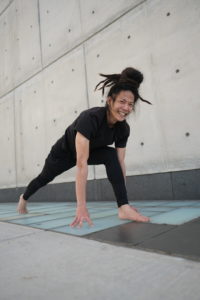 Justin is a Sculpt, Barre, and Yoga teacher based in New York City. Various nerve injuries, debilitating chronic pains, and postural problems, led him to yoga and pilates; which profoundly impacted his body and mind. Cognizant of the relation between the physical, psychological, and emotional, Justin has a deep love for creative yet sound movement patterns that nurture proprioception and mobility, cultivate strength and balance, and instill fluidity and adaptability.
Instagram: @fluiddynamix
Photo Credit: @reneechoiphotography
Never Miss a Post!
The Top Three Reasons for Joining NJYC
The greatest teachers, studios, classes and communities are in the Garden State.
You are ready to inspire and be inspired.
You believe in living a life you love, supported by a practice that makes you feel amazing

